Best time to visit Washington, D.C. — month by month
Spring (late March–May) and early fall (September–October) are the best times to visit Washington, D.C., for mild weather and comfortable walking conditions. Late March–early April is the peak cherry blossom window if you want to time a visit for blooms.
In this guide
- At a glance — when to plan your visit
- January–February: winter and lower crowds
- March–April: cherry blossom season and changeable spring
- May: one of the best single months to visit
- June–August: summer — hot and lively
- September–October: fall colors and comfortable weather
- November–December: drier late fall and holiday season
At a glance — when to plan your visit
Spring (late March–May) and early fall (September–October) offer the most comfortable weather for walking the National Mall, museum hopping, and exploring the Navy Yard neighborhood near Thompson Washington D.C.
Summer brings hot, humid conditions and larger crowds for tours; winter is cooler with occasional snow but generally mild temperatures compared with northern U.S. cities.
- Best overall months: May, late September–October
- Best for cherry blossoms: late March–early April (peak varies year to year)
- Driest month on average: November
| Month / Period | Why visit |
|---|---|
| Late Mar–Apr | Cherry blossoms; mild but changeable spring weather |
| May | Warm, green city with fewer summer tour groups |
| Jun–Aug | Hot, humid; more outdoor events and longer daylight |
| Sep–Oct | Comfortable temperatures and fall color |
| Nov | Drier conditions; cooler weather |
| Dec–Feb | Off-peak travel, possible snow, lower crowd levels |
January–February: winter and lower crowds
January and February are the quietest months for tourism. Expect generally mild winter temperatures with the possibility of snow some years; snowfall averages around 14 inches annually across the year, with January being the month with the most snow on average.
If you prefer lower hotel rates and shorter lines at museums and monuments, winter is a practical choice. Outdoor waterfront walks on the Anacostia Riverwalk Trail will be colder but still accessible.
- Lower visitor numbers at National Mall and museums
- Check weather forecasts for occasional snow or cold snaps
- Thompson Washington D.C. amenities like the 24-hour fitness center and Surveyor restaurant remain available
| Consider | Note |
|---|---|
| Room choice | Any room type — fewer availability pressures; Thompson Suite and other rooms available |
| Transport | Short drive from Ronald Reagan Washington National Airport (about 15–19 minutes) |
| Activities | Indoor museums, restaurant dining, rooftop views on clear days |

March–April: cherry blossom season and changeable spring
Late March through early April is when the cherry blossoms typically reach peak bloom around the Tidal Basin. Peak bloom timing varies each year, so flexible travel dates are helpful if blooms are your priority.
Spring weather is mild but can be unpredictable, with rain likely one to two days per week on average. Plan layers and a light rain jacket for comfortable walking between Thompson Washington D.C., the Yards Park, and the National Mall.
- Book accommodation early for peak bloom dates if you need a specific day
- Expect larger crowds near the Tidal Basin and National Mall during peak bloom
- Navy Yard area remains walkable from the hotel to Nationals Park and waterfront trails
| Tip | Why it helps |
|---|---|
| Use Navy Yard-Ballpark Metro | About a 5-minute walk to the hotel; faster than driving during busy periods |
| Reserve Surveyor or Rooftop at The Thompson in advance | Higher visitor levels can make dining reservations useful |
| Allow extra time for travel to Tidal Basin | Traffic and crowds increase during peak bloom |
May: one of the best single months to visit
May is frequently recommended as the single best month to visit Washington, D.C., because temperatures are comfortably warm and the city is green and active without the peak summer humidity.
This is a good month for walking from Thompson Washington D.C. to nearby attractions like Nationals Park, Yards Park, the Anacostia Riverwalk Trail, and the National Mall.
- Comfortable weather for walking and outdoor cafes
- Fewer summer tour groups compared with June–August
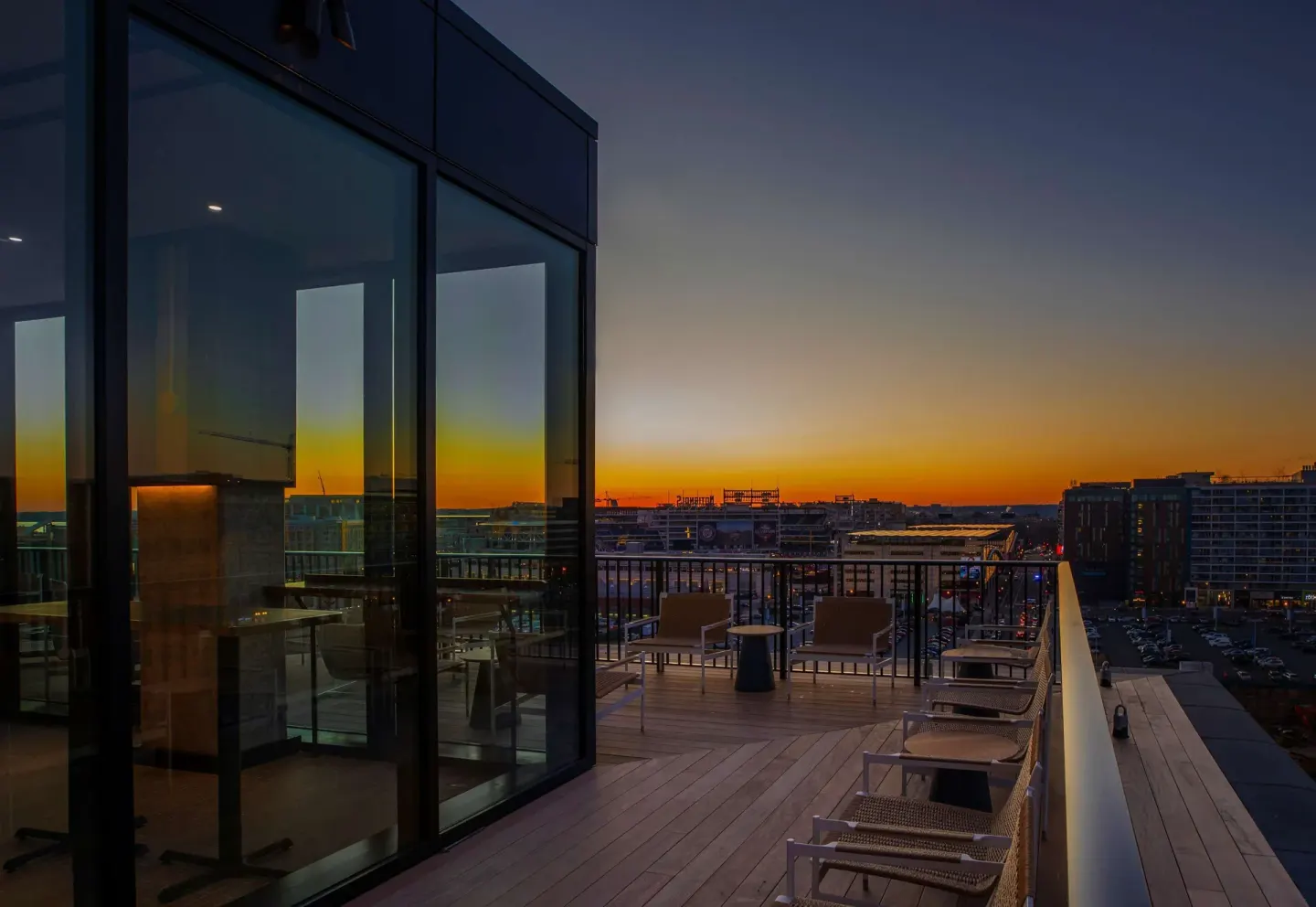
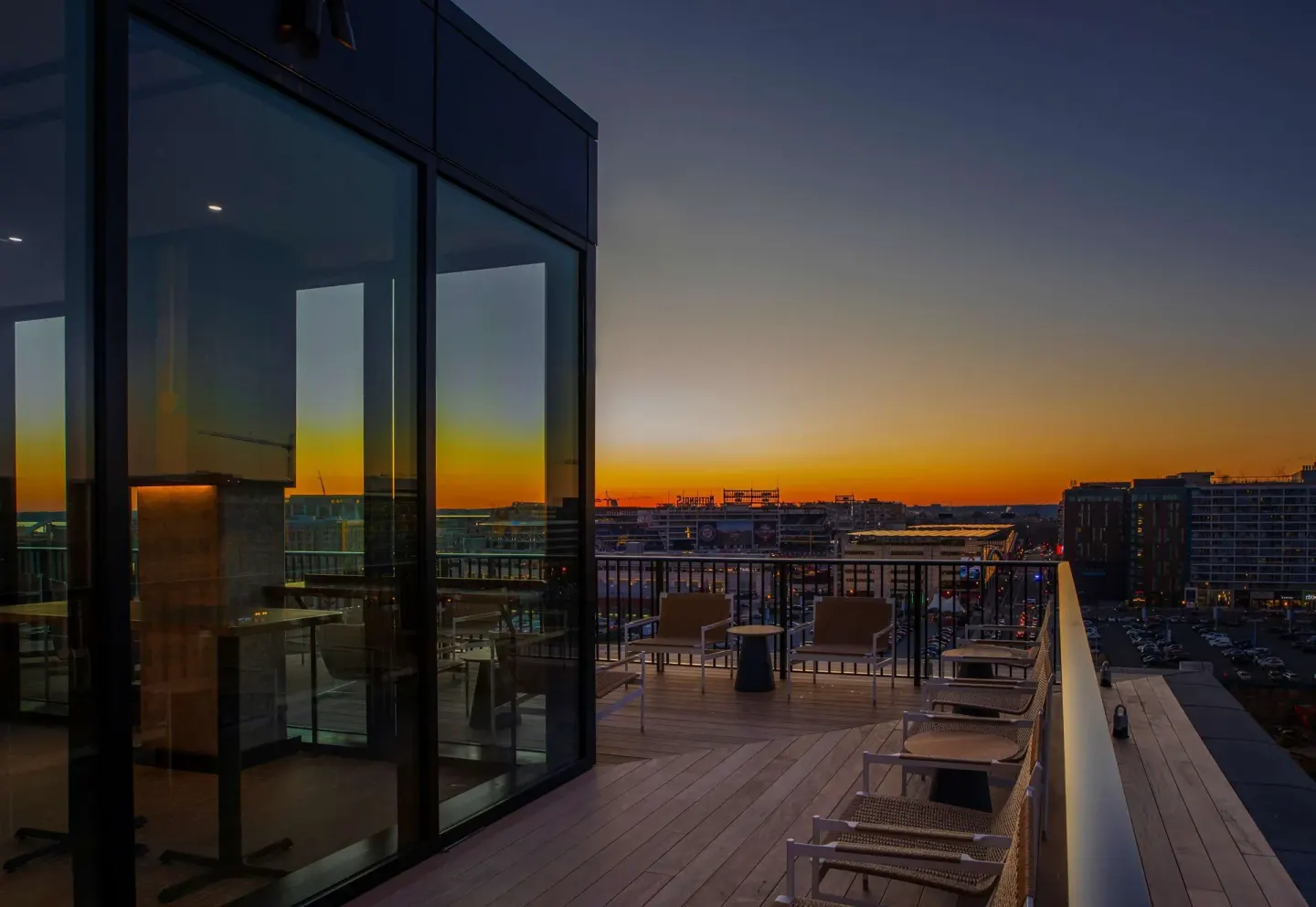
- Good time for rooftop drinks at Rooftop at The Thompson during sunset
| Why May | Practical note |
|---|---|
| Mild temperatures | Easier to walk between Navy Yard and central monuments |
| Active neighborhood life | Restaurants and rooftop venues are lively but not overcrowded |
| Good hotel availability | Still before peak summer rates and crowds |

June–August: summer — hot and lively
June through August are the hottest and most humid months in Washington, D.C. Expect higher temperatures and increased humidity; July and August are typically the most uncomfortable for heat-sensitive visitors.
Summer is also the busiest tourist season, with more group tours and events. Book dining at Surveyor and rooftop reservations early, and plan outdoor activities for mornings or evenings when temperatures are cooler.
- Bring breathable clothing and stay hydrated on walks
- Consider morning museum visits and evening rooftop drinks
- Expect larger crowds at the National Mall and major museums
| Activity | Best time of day |
|---|---|
| Museum visits | Morning (cooler, fewer crowds) |
| Rooftop at The Thompson | Sunset to late evening |
| Walks on Anacostia Riverwalk Trail | Early morning or later evening for cooler conditions |
September–October: fall colors and comfortable weather
Early fall brings lower humidity, comfortable daytime temperatures, and autumn color. September and October are excellent months for walking the city and for outdoor dining at nearby waterfront restaurants.
Crowds typically thin after Labor Day, making sidewalks and museums easier to navigate while still enjoying outdoor activities and rooftop views from Thompson Washington D.C.
- Great walking weather for the National Mall and Capitol Riverfront
- Thompson Washington D.C.'s rooftop and Surveyor are good options for mild evenings
- November tends to be the driest single month on average if you prefer minimal rain
| Suggestion | Benefit |
|---|---|
| Book rooms early for early fall events | Demand rises around conference and sports schedules |
| Use the hotel's concierge | They can advise on nearby seasonal events and Nationals Park schedules |
| Choose a room with a view | Room, River View or Room, Corner offer city/river perspectives |
November–December: drier late fall and holiday season
November is noted as one of the drier months in Washington, D.C., with cooler but generally stable weather. December brings holiday activity and decorations across the city and can be busier around major holidays.
If you travel in late fall or early winter, expect fewer daytime tourists at major attractions but possible crowds for holiday events. Hotel amenities like Surveyor, Thompson Bar Room, and Rooftop at The Thompson continue operating with their usual hours.
- November offers drier conditions and cooler temperatures
- December includes seasonal events — plan for higher demand around holidays
- Winter travel can mean better hotel deals and shorter lines at museums
| Plan | Why |
|---|---|
| Reserve dining for holiday evenings | Restaurants and rooftop bars can fill for seasonal events |
| Check travel times from DCA | Ronald Reagan Washington National Airport is the closest airport (roughly a 15–19 minute drive) |
| Expect variable weather | Snow is possible some years but not guaranteed |